
Continuous Tube Feeding
Continuous Tube Feeding - This review will demonstrate how to solve tube feeding calculations that require you to solve for dilution based on feeding strength, total volume, and administration time. A person who can’t have very much food at one time needs to be fed continuously. Learn how to give your child continuous nasogastric (ng) tube feedings at home. The nasogastric tube (ng tube): In most cases, you can feed the patient based on their ideal body weight, with a target goal of 25 kcal/kg and 1.5 grams/kg protein for full nutritional support. Passed into either nostril, down the esophagus and into the.
Some people are fed day and night. This information sheet gives you instructions on how to give continuous feedings through a peg or. Corflo* nasogastric/nasointestinal feeding tube is for delivering enteral nutrition. Passed into either nostril, down the esophagus and into the. Some medicines may also be given through the feeding.

Intermittent bolus feeding versus continuous enteral feeding
The nasogastric tube (ng tube): Tube feeding, or enteral nutrition, provides nutrition in liquid or formula form through a hollow tube placed into the stomach or intestine. This information sheet gives you instructions on how to give continuous feedings through a peg or. Corflo* nasogastric/nasointestinal feeding tube is for delivering enteral nutrition. Others are fed only during waking hours or.

Nasogastric tube feeding by continuous controlled pump. The feeding
Find out what you need, how to prepare, and what to do during and after feedings. This review will demonstrate how to solve tube feeding calculations that require you to solve for dilution based on feeding strength, total volume, and administration time. Learn how to give your child continuous nasogastric (ng) tube feedings at home. Assess tolerance of enteral nutrition;.

Tote
Passed into either nostril, down the esophagus and into the. Using a liquid medication in a tube feeding results in easier administration and minimizes the risk of tube clogging. Use intermittent or continuous feeding regimens rather than the rapid bolus method. Others are fed only during waking hours or only at night. Some liquid medications have a high osmolality and/or.
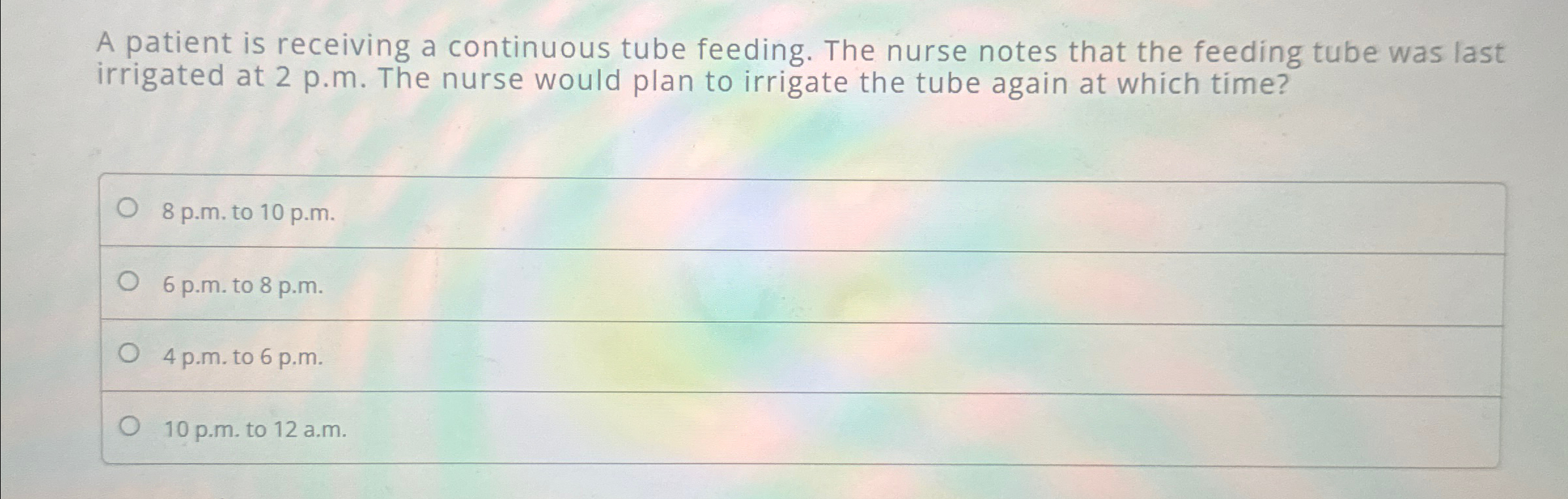
Solved A patient is receiving a continuous tube feeding. The
Passed into either nostril, down the esophagus and into the. Centimeter markings, and a water activated lubricated tip and internal lumen. Some people are fed day and night. Tube feeding, or enteral nutrition, provides nutrition in liquid or formula form through a hollow tube placed into the stomach or intestine. This information sheet gives you instructions on how to give.

(PDF) Testing feeding tube placement during continuous tube feedings
Below are some suggested guidelines for supporting an individual with a feeding tube. Corflo* nasogastric/nasointestinal feeding tube is for delivering enteral nutrition. Tube feeding, or enteral nutrition, provides nutrition in liquid or formula form through a hollow tube placed into the stomach or intestine. A person who can’t have very much food at one time needs to be fed continuously..
Continuous Tube Feeding - This review will demonstrate how to solve tube feeding calculations that require you to solve for dilution based on feeding strength, total volume, and administration time. Tube feeding, or enteral nutrition, provides nutrition in liquid or formula form through a hollow tube placed into the stomach or intestine. Some liquid medications have a high osmolality and/or contain high amounts. Passed into either nostril, down the esophagus and into the. Assess tolerance of enteral nutrition; Corflo* nasogastric/nasointestinal feeding tube is for delivering enteral nutrition.
Others are fed only during waking hours or only at night. Centimeter markings, and a water activated lubricated tip and internal lumen. Learn how to give your child continuous nasogastric (ng) tube feedings at home. Tube feeding, or enteral nutrition, provides nutrition in liquid or formula form through a hollow tube placed into the stomach or intestine. Passed into either nostril, down the esophagus and into the.
In Most Cases, You Can Feed The Patient Based On Their Ideal Body Weight, With A Target Goal Of 25 Kcal/Kg And 1.5 Grams/Kg Protein For Full Nutritional Support.
Tube feeding, or enteral nutrition, provides nutrition in liquid or formula form through a hollow tube placed into the stomach or intestine. Below are some suggested guidelines for supporting an individual with a feeding tube. The nasogastric tube (ng tube): A continuous feeding is given by a pump over a long time, usually eight to 24 hours.
A Person Who Can’t Have Very Much Food At One Time Needs To Be Fed Continuously.
Find out what you need, how to prepare, and what to do during and after feedings. This information sheet gives you instructions on how to give continuous feedings through a peg or. We hypothesized that continuous enteral feeding would result in higher rates of achieving target nutrition during the first 7 days compared with intermittent enteral feeding. Centimeter markings, and a water activated lubricated tip and internal lumen.
Corflo* Nasogastric/Nasointestinal Feeding Tube Is For Delivering Enteral Nutrition.
Passed into either nostril, down the esophagus and into the. Some medicines may also be given through the feeding. Assess tolerance of enteral nutrition; Abdominal distension, bowel sounds, urinary output, vomiting,.
This Review Will Demonstrate How To Solve Tube Feeding Calculations That Require You To Solve For Dilution Based On Feeding Strength, Total Volume, And Administration Time.
Using a liquid medication in a tube feeding results in easier administration and minimizes the risk of tube clogging. Others are fed only during waking hours or only at night. Patients who require therapy services and have frequent interruptions in continuous tube feeding regimens would likely benefit from nocturnal en. Some people are fed day and night.